Free Consultation — Talk to a Florida Lawyer TodayNo fee unless we recoverHablamos españolAvailable 24/7
5.0Google Reviews
CALL 24/7(305) 600-0529WhatsApp UsText us now, tap to chat
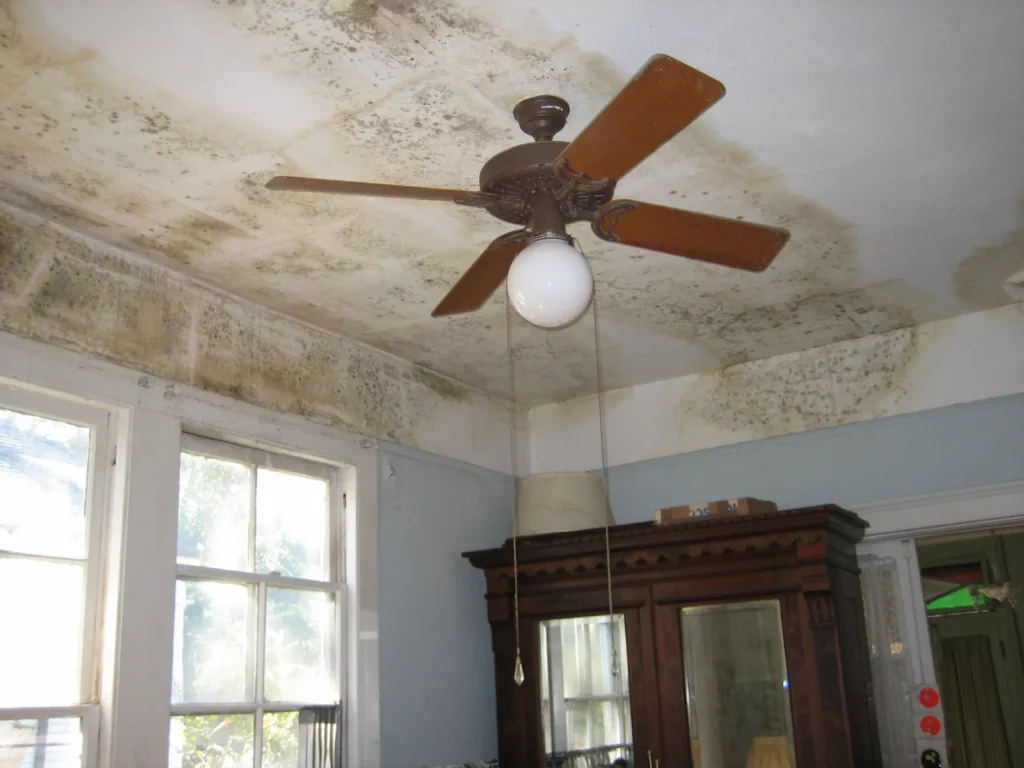
Condo water damage: mold and water stains spreading across a bedroom ceiling around a ceiling fan after leaks

Condo Water Damage Guide · By Tomas Robirosa, Esq.

Condo Water Damage in Florida: Who Pays When Water Leaks From the Ceiling?

Water is coming through your ceiling, the stain keeps growing, and now you smell mold. The association says it is your problem, your neighbor says it is not theirs, and your insurer wants details. Here is how Florida law generally splits the responsibility, and what to do first.

  • Free consultation
  • No attorney’s fee unless we recover
  • Hablamos español
  • Available 24/7
  • Free ConsultationNo cost, no obligation
  • No Fee Unless We RecoverContingency fee cases
  • Bilingual AttorneyEnglish & Spanish
  • Available 24/7Fast communication

Condo water damage is one of the most common fights in Florida condominiums: a leak from the unit above, a broken pipe inside a wall, a roof or window that lets water in during a storm, or an AC line that overflows. Who pays usually depends on where the water came from, what was damaged, what your condominium documents say, and whether someone was careless. This article explains the general rules under Chapter 718 of the Florida Statutes and what to do to protect your claim. This article is general information, not legal advice.

Water leaking from the ceiling? What to do first

The first hours matter. Water keeps spreading inside ceilings and walls, and the longer materials stay wet, the more likely mold becomes. Before anyone argues about who pays, protect your home and your proof.

  1. Stop the water if you safely can. If the leak is inside your unit, shut the water valve. If it comes from above, knock on your neighbor's door and call building security or management right away. Keep away from wet electrical fixtures and outlets.
  2. Tell the association in writing. Call management, then follow up by email or the building's portal the same day: when it started, where the water is coming from and what is damaged. Keep a copy.
  3. Take photos and video before cleanup. Film the ceiling, the dripping water, wet floors, furniture and belongings, and the source if you can see it (for example the unit above, a pipe, a window or the AC closet).
  4. Protect your belongings. Move furniture and electronics, use buckets and towels, and start drying with fans or a dehumidifier.
  5. Report it to your own insurer. Most unit owners carry a condo unit owner policy, often called an HO-6. Report the loss and ask for a claim number, even if you think the association or a neighbor should pay.
  6. Keep every receipt. Water extraction, drying equipment, a hotel night, plumber visits and replacement items can all be part of a claim.
  7. Do not throw damaged items away too fast. Photograph them first and ask the insurer whether the adjuster needs to see them.
  8. Let the association in to find the source. Florida law gives the association a right of access to units to repair common elements and to prevent damage to other units.

Who is responsible for condo water damage in Florida?

There is no single answer that fits every building. In Florida, responsibility for condo water damage generally depends on four questions:

  • Where did the water come from?A common pipe, the roof or an exterior wall is usually treated differently from a pipe, water heater or appliance that serves only one unit.
  • What was damaged?The building structure and original drywall, or the finishes and contents inside your unit, such as flooring, paint, cabinets and furniture.
  • What do your condo documents say?The declaration of condominium and bylaws often decide who maintains things like windows, sliding doors, balconies, AC units and limited common elements.
  • Was someone careless?Negligence, such as ignoring a known leak, can shift the cost to the person or association that caused it.

Under section 718.113(1), Florida Statutes, the association is responsible for maintaining the common elements, except for limited common elements that the declaration makes the unit owner's responsibility. Common elements usually include the roof, the structure, the exterior walls and the plumbing that serves more than one unit, but your declaration controls the details.

Read your declaration first

Two buildings on the same street can split condo water damage differently. Ask management for the declaration, bylaws and rules if you don't have them, and look for sections on maintenance, insurance and "limited common elements".

What the association insurance covers vs your HO-6 policy

Florida law splits insurance between the association and the unit owner. Under section 718.111(11), the association must carry adequate property insurance for the condominium property as originally installed (or replaced with like kind and quality). But the association's policy must exclude all personal property inside the unit, and it also excludes certain items inside a unit that serve only that unit, including:

  • floor, wall and ceiling coverings (for example tile, wood floors, carpet, paint and wallpaper)
  • electrical fixtures
  • appliances
  • water heaters and water filters
  • built-in cabinets and countertops
  • window treatments such as curtains, drapes and blinds

The unit owner is generally responsible for those items, which is why the HO-6 policy matters. Florida law also requires a unit owner policy to include at least $2,000 of loss assessment coverage (section 627.714), which can help if the association passes part of a loss on to the owners.

Whether your own policy covers a specific leak depends on its wording: many policies treat a sudden pipe break differently from water that leaked slowly over a long time. Ask your insurer for a full copy of the policy, not just the declarations page.

Leak from the unit above: who pays?

This is the call we hear most: "Water is coming from the condo upstairs, and nobody wants to pay." Generally:

  • The associationRepairs the parts of the building it insures after a covered event, such as the original drywall and structure, as a common expense under section 718.111(11)(j).
  • You and your HO-6 insurerUsually handle your floors, paint, cabinets, fixtures and belongings, the items the association's policy excludes.
  • The neighbor aboveMay be responsible if the leak came from their toilet, washing machine, water heater, AC drain or a pipe serving only their unit, especially if they were careless or ignored warnings.

Florida law also lets the association charge a unit owner for repair costs that insurance doesn't pay when the damage was caused by that owner's (or their family's, tenant's or guest's) intentional conduct, negligence, or failure to follow the declaration or rules. Insurers that pay a claim may also go after the person who caused the loss.

So keep a record of everything the upstairs neighbor, the association and the plumber tell you about the source. The cause of the leak usually decides who pays for condo water damage.

When is the condo association responsible?

The association may be responsible when water comes from a part of the building it must maintain, for example a roof, a common pipe or riser, an exterior wall, or a common drain line, and it failed to repair it, waited too long, or ignored repeated complaints.

  • Right of access: section 718.111(5) gives the association a right of access to each unit during reasonable hours to maintain and repair common elements and to prevent damage to other units. An association that knows about a leak has tools to fix it.
  • Enforcing the documents: section 718.303 lets a unit owner bring an action at law or in equity against the association, another owner or a tenant who fails to comply with Chapter 718 or the condominium documents, and the prevailing party can generally recover reasonable attorney's fees.
  • Arbitration exception: some condo disputes must go to nonbinding arbitration with the state before a lawsuit (section 718.1255). That section lists claims for damage to a unit based on the association's alleged failure to maintain the common elements among the disputes that are not covered.

Repeated leaks from the same source, written complaints that were ignored, and a report from a plumber or leak detection company can all be important evidence.

Mold after a condo leak: who pays and what to do

Mold often appears after water sits inside a ceiling, wall or under flooring. Who pays for mold generally follows the same questions as the leak: where the water came from, what was damaged, and whether someone ignored the problem.

The Florida Department of Health advises fixing the moisture source first and drying wet materials as soon as possible, ideally within 24 hours, and keeping indoor humidity below 60 percent. It notes that small areas can often be cleaned by the owner, while larger areas should be handled by experienced professionals, and that bleach should never be mixed with ammonia. The department generally does not recommend mold testing; the focus is on finding and fixing the water.

Insurance is the hard part. Florida statutes do not set a single rule for mold coverage, and many property policies limit or exclude mold, especially when it comes from a slow, long-term leak. Read the mold section of your policy and of the association's policy carefully.

Mold can also be a health concern for some people. If you or your family have symptoms, see a doctor and keep those records.

Insurance claims and time limits

Report condo water damage quickly, both to the association and to your own insurer. Under section 718.111(11)(j), the association may not have to pay for a loss that the owner knew or should have known about but didn't report until after the association's insurance claim was resolved or denied as late.

Under section 627.70132, Florida Statutes, notice of a new or reopened property insurance claim generally must be given within 1 year after the date of loss, and a supplemental claim generally within 18 months. Every case is different, so speak with an attorney to confirm the deadline that applies to you.

Lawsuits have their own time limits. Claims based on negligence generally must be filed within 2 years under section 95.11, and claims based on the condominium documents or an insurance policy may have a different limit. Every case is different, so speak with an attorney to confirm the deadline that applies to you.

Common mistakes after a condo leak

  • Only calling, never writing.A phone call to the front desk leaves no record. Follow every call with an email.
  • Cleaning up before documenting.Photos and video of the active leak are often the best proof of the source.
  • Waiting for the association to decide.Report to your own insurer too. The association's answer can take weeks.
  • Doing repairs without board approval.Florida law generally lets the association do the reconstruction; owners usually need the board's prior written consent and permits to do work on parts the association handles.
  • Ignoring mold.Painting over a stain can hide a problem that keeps growing.
  • Accepting "it's not our responsibility" as the final answer.Ask which section of the declaration they rely on, in writing.

If the association, a neighbor or an insurer won't take responsibility, a lawyer can review the declaration, the policies and the evidence. You can also read our guides on water damage claims, condominium disputes and what to do if your home insurance claim is denied.

Frequently Asked Questions

Who is responsible for water damage in a condo in Florida?
It generally depends on where the water came from, what was damaged, what the declaration says, and whether someone was negligent. The association usually handles the common elements and the parts of the building it insures, while the unit owner usually handles floor, wall and ceiling coverings, fixtures, appliances, cabinets and personal property inside the unit.
Who pays for water damage from the condo upstairs?
If the leak came from something that serves only the upstairs unit, such as a toilet, washing machine, water heater or AC drain, the upstairs owner and their insurer may be responsible, especially if they were careless. The association generally still repairs the parts of the building it insures, and your HO-6 policy may cover your finishes and belongings.
Is the condo association responsible for a leak from a common pipe or the roof?
Generally, the association must maintain the common elements, which usually include the roof, the structure and pipes that serve more than one unit. If it failed to repair a known problem, it may be responsible for the condo water damage that followed. Your declaration controls the details.
Does the association insurance cover my floors and cabinets?
Usually not. Under section 718.111(11), the association policy excludes items inside a unit that serve only that unit, such as floor, wall and ceiling coverings, electrical fixtures, appliances, water heaters, built-in cabinets and countertops, and window treatments. Those are generally the owner's responsibility.
Does an HO-6 policy cover water damage from upstairs?
It depends on the policy wording. Many policies treat a sudden leak differently from long-term seepage, and some limit mold. Ask your insurer for the full policy and report the loss promptly.
Who is responsible for mold in a condo?
Generally, the same rules as the leak: the source of the water, what was damaged, and whether someone ignored the problem. Mold coverage is often limited or excluded in insurance policies, so read the mold section of both policies.
Can the condo association enter my unit to fix a leak?
Yes. Section 718.111(5) gives the association a right of access to each unit during reasonable hours to maintain and repair common elements and to prevent damage to other units.
Can I sue my condo association for water damage?
Possibly. Section 718.303 allows a unit owner to bring an action against the association for failing to comply with Chapter 718 or the condominium documents. Claims for damage to a unit based on the association's alleged failure to maintain the common elements are generally not part of the state arbitration requirement in section 718.1255. A lawyer can review whether you have a claim.
How long do I have to report condo water damage to my insurer?
Under section 627.70132, notice of a new property insurance claim generally must be given within 1 year after the date of loss, and a supplemental claim generally within 18 months. Every case is different, so speak with an attorney to confirm the deadline that applies to you.
Do I need a lawyer for a condo leak dispute?
Not always. If the association, a neighbor or an insurer refuses to pay, the damage is large, or mold has spread, a lawyer can review your declaration, the policies and the evidence and explain your options. We offer a free consultation, and there is no fee unless we recover.

Photo: Infrogmation of New Orleans / Wikimedia Commons, CC BY 3.0 (mold on a bedroom ceiling after storm leaks, New Orleans, 2005)

Disclaimer

This article is for general information only and is not legal advice. Every situation is different, and the law can change. Do not make decisions based on this article alone. Speak with a licensed Florida attorney about your specific situation. Reading this article does not create an attorney-client relationship.

Free Consultation!

Prefer to talk to a lawyer now?

Call (305) 600-0529Se habla español · Available 24/7


Tomas Robirosa
Tomas Robirosa, Esq.Founding Attorney
Florida Supreme Court Certified Circuit Civil Mediator
Tomas Robirosa, Miami personal injury lawyer

Your Attorney

Work Directly With Attorney Tomas Robirosa

Tomas Robirosa is the founding attorney of Robirosa Accident & Injury Law. He built his practice around careful preparation and personal attention: when you hire the firm, you talk to your lawyer, in English or Spanish, and you always know where your case stands.

He graduated cum laude from Nova Southeastern University’s Shepard Broad College of Law, is a Florida Supreme Court Certified Circuit Civil Mediator, and is admitted to practice in Florida state courts and the U.S. District Court for the Southern District of Florida.

  • Licensed in Florida
  • Bilingual: English & Spanish
  • Certified Circuit Civil Mediator
  • U.S. District Court, S.D. Florida
  • Free consultations
  • Contingency fee: no fee unless we recover

Recognition & memberships

Elite Lawyer Personal Injury 2026 badgeLawyers of Distinction 2026 badgeAIOTL 40 Under 40 2026 badgeFlorida Justice Association badgeThe Florida Bar Trial Lawyers Section logoAvvo Clients' Choice Award 2026 badge, Tomas RobirosaAvvo client reviews badge, Tomas Robirosa

What Our Clients Say

Real reviews from real clients on Google.

Posted on Google Google
Kk Ll profile picture
Kk Ll
Google star 1Google star 2Google star 3Google star 4Google star 5Trustindex verifies that the original source of the review is Google.
Great service would recommend helped tremendously
Posted on Google Google
Johanna Martinez profile picture
Johanna Martinez
Google star 1Google star 2Google star 3Google star 4Google star 5Trustindex verifies that the original source of the review is Google.
LA ATENCION FUE EXCELENTE Y MUY RAPIDA.
Posted on Google Google
Maša Nestorović profile picture
Maša Nestorović
Google star 1Google star 2Google star 3Google star 4Google star 5Trustindex verifies that the original source of the review is Google.
I’ve had an amazing experience working with Tomas. He is super knowledgeable and very personable. He helped us tremendously, highly recommend.
Posted on Google Google
Kathy Maria Alvarez profile picture
Kathy Maria Alvarez
Google star 1Google star 2Google star 3Google star 4Google star 5Trustindex verifies that the original source of the review is Google.
Tomás fue un excelente profesional.Me dejó muy tranquila porque me explicó todo en español, con total claridad y transparencia. Si tuviste un accidente en Miami Beach, no dudes en llamarlo.
Posted on Google Google
Cristina Gonzalez profile picture
Cristina Gonzalez
Google star 1Google star 2Google star 3Google star 4Google star 5Trustindex verifies that the original source of the review is Google.
The absolute best!! Responsive, honest, and easy to talk to. If you need an injury attorney in Miami Beach who also speaks Spanish, Tomas is the one to call. Highly recommend having him handle your case.
Posted on Google Google
Mario Espinosa profile picture
Mario Espinosa
Google star 1Google star 2Google star 3Google star 4Google star 5Trustindex verifies that the original source of the review is Google.
As a physical therapist, I’ve had the opportunity to work with Robirosa Accident & Injury Law while treating patients recovering from injuries. Their team has always been professional, responsive, and genuinely focused on making sure their clients receive the care they need. From a healthcare provider’s perspective, communication and coordination can make a huge difference in these cases, and their team does a great job staying involved without interfering with the clinical process. It’s clear they care about their clients as people, not just as cases. I would highly recommend Robirosa Accident & Injury Law to anyone looking for an injury attorney who is professional, accessible, and committed to helping their clients through the recovery process.
Posted on Google Google
Derek Nier profile picture
Derek Nier
Google star 1Google star 2Google star 3Google star 4Google star 5Trustindex verifies that the original source of the review is Google.
Tomas is an industry professional. He handles his cases with extreme care and provides excellent customer service alongside excellent communication. I would recommend him to anyone looking for a competent attorney in the Miami Beach area.
Posted on Google Google
Rosalia Rodriguez Aquino profile picture
Rosalia Rodriguez Aquino
Google star 1Google star 2Google star 3Google star 4Google star 5Trustindex verifies that the original source of the review is Google.
Es muy buen Abogado, confiable, transparente y muy humanitario. Estás siempre pendiente a todos y muy comunicativo. Me siento muy satisfactoria de su buen trabajo. Ojalá hayan muchos abogados como él. Que Dios lo bendiga Gracias, porque ganamos el caso
Posted on Google Google
Andrea Silva profile picture
Andrea Silva
Google star 1Google star 2Google star 3Google star 4Google star 5Trustindex verifies that the original source of the review is Google.
🌟🌟🌟🌟🌟 Wow- excelente experiencia con Tomás. Lo recomiendo al 100%. Cuando ningún otro abogado me apoyaba y sentía que el caso estaba perdido, me conectaron con él y ¡ganamos! El proceso fue claro, fluido y efectivo. Es muy profesional, sabe exactamente lo que hace y realmente le importa ayudar a sus clientes. Estoy muy agradecida por su apoyo y sin duda lo recomendaré a cualquier persona que necesite un abogado.
Posted on Google Google
Karim Badawy profile picture
Karim Badawy
Google star 1Google star 2Google star 3Google star 4Google star 5Trustindex verifies that the original source of the review is Google.
Thomas is a true professional! He is knowledgeable and will provide everything he knows for you! Highly recommend!

Talk to a Lawyer Today. It’s Free.

Tell us what happened. We’ll explain your options in English or Spanish, with no obligation.