 EN
Premises Liability Guide · By Tomas Robirosa, Esq.
One step was taller than the others. The handrail was too low, or there was none. You missed a single step you couldn't see. Sometimes the stairs themselves are the problem. Here is how Florida's building code can matter after a fall.
If you fell down stairs and you keep thinking "something about those steps was off," you may be right. Many falls happen on stairs that were built or altered the wrong way: steps of different heights, treads too shallow for your foot, handrails that are missing, too low or impossible to grab, or a single step nobody would expect.
A fall down stairs can change your life. These falls cause head and brain injuries, broken hips, wrists and backs, and in some cases death. This guide explains, in plain language, what the Florida Building Code generally requires for stairs, how Florida courts treat code violations in injury cases, who may be responsible and what to photograph and measure. This article is general information, not legal advice. Every case depends on its facts, so speak with a lawyer about your situation.
When people walk on stairs, their feet set a rhythm after the first step or two. If one step is taller, shorter or shallower than the rest, the foot can catch or miss the edge. That is why building codes require steps in a flight to be close to the same size, and why small differences can matter in a fall.
There are two different kinds of stair cases:
Many falls involve both. A lawyer and, often, an expert can look at the stairs and sort out which rules apply.
Florida has a statewide building code. The 8th Edition (2023) took effect on December 31, 2023, and the 9th Edition (2026) is scheduled to take effect on December 31, 2026. The rules below are from the 2023 edition, in plain words. There are exceptions, and the rules that apply depend on the type of building and when it was built or altered.
The code also has rules on handrails that people can actually grasp, handrails on both sides of many stairs, openings in guards, ramps, landings, doors at stairs and stairway lighting. Whether a specific stair broke a specific rule is a technical question, usually answered by a qualified expert who measures the stairs.
Generally, a building code violation is evidence of negligence in Florida, but it is not automatic proof. Florida courts have said that violating a building code is evidence a jury can consider, not "negligence per se." Examples include Grand Union Co. v. Rocker (Fla. 3d DCA 1984), which involved the South Florida Building Code, and Lindsey v. Bill Arflin Bonding Agency (Fla. 1st DCA 1994), where a missing handrail was a question for the jury.
In practice, that means you still have to show the violation helped cause the fall, and the owner can argue other reasons for it. But a measured, documented code violation can be strong evidence.
Florida also has a specific statute, section 553.84, Florida Statutes. It gives a person damaged by a material violation of the Florida Building Code a right to sue the person or party who committed the violation. The statute has a defense for people who got permits, had plans approved and passed inspections, but that defense has conditions, including one about personal injury, and it does not apply if the person knew or should have known about the violation. How it applies is a legal question for your lawyer.
Many South Florida buildings are decades old. Building codes change over time, and an older building generally is not required to rebuild every stair each time the code changes. The question is often what code applied when the stairs were built or last altered, and whether a later renovation had to meet newer rules.
Even when a stair was legal when it was built, the owner still generally has a duty to keep the property reasonably safe and to warn about hidden dangers. An older stair that is dangerous today can still lead to a claim under general premises liability rules. Older condominium and cooperative buildings three or more stories tall must also have periodic milestone structural inspections under section 553.899, Florida Statutes, and those reports can matter in a stairwell or balcony case.
More than one of them may share responsibility. Your own share of fault also matters: under section 768.81, Florida Statutes, if you are found more than 50% at fault for your own injuries, you generally cannot recover damages, and if you are 50% or less at fault, your recovery is generally reduced by your share.
For more steps after any fall, see what to do after a slip and fall in Florida and our guide to falls in restaurants and bars, including bad stairs and poor lighting.
For most negligence claims, the time to file a lawsuit in Florida is generally two years from the date of the injury, under section 95.11, Florida Statutes. Some claims have different rules, such as wrongful death claims and claims against government agencies, which also require advance written notice, and claims against builders can involve other time limits. Every case is different, so speak with an attorney to confirm the deadline that applies to you.
If you lost a loved one, see our wrongful death page. To talk about your case, see our premises liability lawyer page.
Tomas Robirosa helps people who fell down stairs, were hurt by poor maintenance or were injured in crashes across Miami-Dade, Broward and Palm Beach, and throughout Florida. Consultations are free, and there is no fee unless we recover for you. Se habla español.
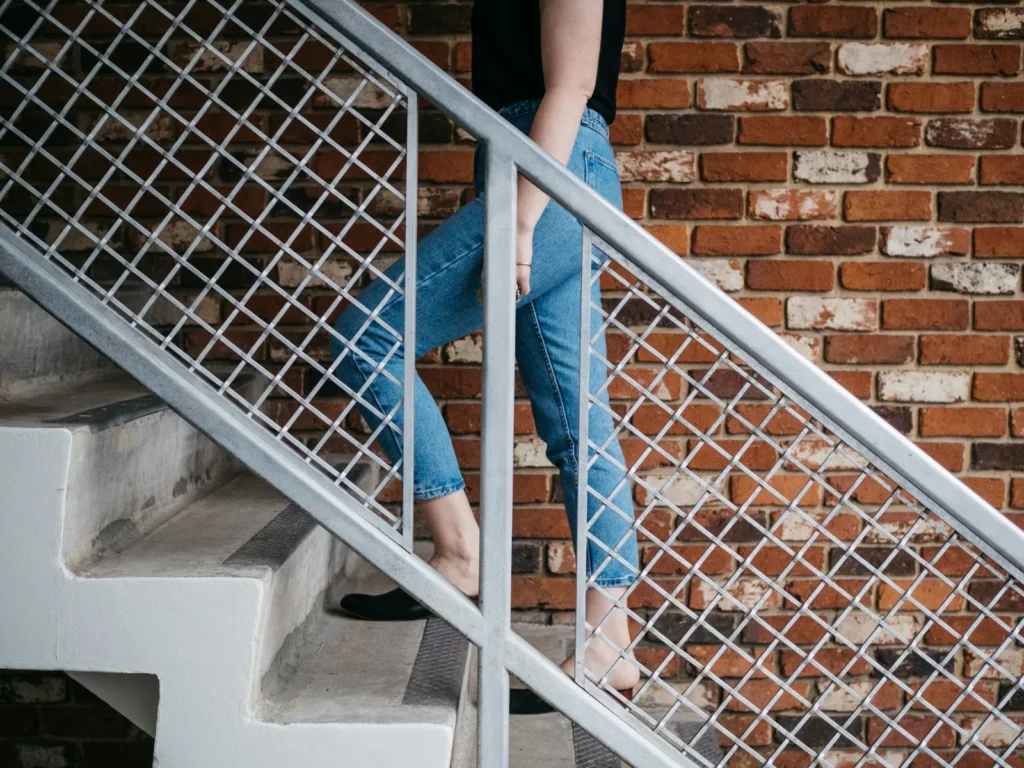
Photo: Anna Sullivan / Unsplash
This article is for general information only and is not legal advice. Every situation is different, and the law can change. Do not make decisions based on this article alone. Speak with a licensed Florida attorney about your specific situation. Reading this article does not create an attorney-client relationship.
Prefer to talk to a lawyer now?
Call (305) 600-0529Se habla español · Available 24/7
Your Attorney
Tomas Robirosa is the founding attorney of Robirosa Accident & Injury Law. He built his practice around careful preparation and personal attention: when you hire the firm, you talk to your lawyer, in English or Spanish, and you always know where your case stands.
He graduated cum laude from Nova Southeastern University’s Shepard Broad College of Law, is a Florida Supreme Court Certified Circuit Civil Mediator, and is admitted to practice in Florida state courts and the U.S. District Court for the Southern District of Florida.
Recognition & memberships


Real reviews from real clients on Google.
EXCELLENT Based on 38 reviews
 Posted on Google

 Kk LlGreat service would recommend helped tremendouslyPosted on Google
 Johanna MartinezLA ATENCION FUE EXCELENTE Y MUY RAPIDA.Posted on Google
 Maša NestorovićI’ve had an amazing experience working with Tomas. He is super knowledgeable and very personable. He helped us tremendously, highly recommend.Posted on Google
 Kathy Maria AlvarezTomás fue un excelente profesional.Me dejó muy tranquila porque me explicó todo en español, con total claridad y transparencia. Si tuviste un accidente en Miami Beach, no dudes en llamarlo.Posted on Google
 Cristina GonzalezThe absolute best!! Responsive, honest, and easy to talk to. If you need an injury attorney in Miami Beach who also speaks Spanish, Tomas is the one to call. Highly recommend having him handle your case.Posted on Google
 Mario EspinosaAs a physical therapist, I’ve had the opportunity to work with Robirosa Accident & Injury Law while treating patients recovering from injuries. Their team has always been professional, responsive, and genuinely focused on making sure their clients receive the care they need. From a healthcare provider’s perspective, communication and coordination can make a huge difference in these cases, and their team does a great job staying involved without interfering with the clinical process. It’s clear they care about their clients as people, not just as cases. I would highly recommend Robirosa Accident & Injury Law to anyone looking for an injury attorney who is professional, accessible, and committed to helping their clients through the recovery process.Posted on Google
 Derek NierTomas is an industry professional. He handles his cases with extreme care and provides excellent customer service alongside excellent communication. I would recommend him to anyone looking for a competent attorney in the Miami Beach area.Posted on Google
 Rosalia Rodriguez AquinoEs muy buen Abogado, confiable, transparente y muy humanitario. Estás siempre pendiente a todos y muy comunicativo. Me siento muy satisfactoria de su buen trabajo. Ojalá hayan muchos abogados como él. Que Dios lo bendiga Gracias, porque ganamos el casoPosted on Google
 Andrea Silva🌟🌟🌟🌟🌟 Wow- excelente experiencia con Tomás. Lo recomiendo al 100%. Cuando ningún otro abogado me apoyaba y sentía que el caso estaba perdido, me conectaron con él y ¡ganamos! El proceso fue claro, fluido y efectivo. Es muy profesional, sabe exactamente lo que hace y realmente le importa ayudar a sus clientes. Estoy muy agradecida por su apoyo y sin duda lo recomendaré a cualquier persona que necesite un abogado.Posted on Google
 Karim BadawyThomas is a true professional! He is knowledgeable and will provide everything he knows for you! Highly recommend!
Tell us what happened. We’ll explain your options in English or Spanish, with no obligation.