 EN

Car Accident Guide · By Tomas Robirosa, Esq.
Someone borrowed a car and crashed into you. Or the driver who hit you says the car belongs to a parent, a boss or a friend. In Florida, the person who owns that car may be responsible too.
If you were hurt by a driver who didn't own the car, Florida's dangerous instrumentality doctrine can make the owner responsible for the crash, even if the owner was nowhere near it. That matters, because a serious crash can change a person's life, and more than one responsible party can mean more insurance available for medical bills, lost income and everything else the crash took from you. This guide explains how the rule works and the main exceptions. This article is general information, not legal advice.
Florida courts have treated cars as "dangerous instrumentalities" for more than a hundred years. The Florida Supreme Court adopted the dangerous instrumentality doctrine in 1920, in a case called Southern Cotton Oil Co. v. Anderson. The idea behind it is simple: a car can cause serious harm, so the person who owns it and lets someone else drive it shares responsibility for how it is driven.
Under the doctrine, an owner who voluntarily lets another person use the car is generally responsible for that driver's careless driving, even if the owner personally did nothing wrong.
Lawyers call this vicarious liability: the owner is held liable because of the driver's negligence, not their own. The Florida Supreme Court has described the owner's duty as a "nondelegable obligation to ensure that the vehicle is operated safely" (Aurbach v. Gallina, 2000, quoting Hertz Corp. v. Jackson, 1993).
If a careless driver hurts you while driving someone else's car with permission, you may have a claim against both the driver and the owner. The driver still has to be at fault. The doctrine doesn't make an owner responsible for a crash the driver didn't cause.
Generally, yes, if the owner gave permission. Permission (lawyers say "consent") can be express, like handing over the keys for a trip to the store. It can also be implied, like a relative who drives the family car every day with the owner's knowledge. Common situations include:
Who counts as the "owner" isn't always as simple as the name on the title. Florida courts look at who has real control over the car and a real ownership interest in it. In Aurbach v. Gallina (2000), the Florida Supreme Court held that a father who paid for his daughter's car but held neither legal title nor an identifiable property interest in it should not be held vicariously liable on those facts alone.
On the other hand, a person whose name is on the title usually has a hard time avoiding responsibility: the Court has called the situations where a titleholder escapes liability "extremely limited." Ownership questions can be technical, so they are worth reviewing with a lawyer.
Rental and leasing companies. A federal law, often called the Graves Amendment, generally says a business that rents or leases vehicles is not liable under state law just because it owns the vehicle, as long as the company itself was not negligent and committed no criminal wrongdoing.
Florida's statute has its own rental and lease rules too. For long-term leases of a year or longer, the leasing company generally isn't treated as the owner if the lessee is required to carry the insurance the statute lists and that insurance is in effect.
Company cars and work trucks. When an employer owns the vehicle an employee was driving with permission, the employer can be responsible as the owner under the dangerous instrumentality doctrine. Crashes with commercial trucks also involve other rules and often more than one company; see our truck accident page.
Rideshare and delivery drivers. Rideshare drivers often drive their own car or a rented one, and rideshare claims have their own insurance rules. See our page on rideshare and delivery accidents.
The dangerous instrumentality doctrine is strict, but Florida courts recognize a few limited exceptions:
Owners sometimes say the driver "didn't have permission." Whether there was consent, and whether a car was really stolen or converted, are questions of fact that often turn on the evidence: texts, who had the keys, how often the driver used the car, and whether a police report was made. Don't assume the owner is off the hook just because the owner says so.
For the full checklist, see what to do after a car accident in Florida.
In Florida, a negligence claim from a car crash generally has to be filed in court within two years. Every case is different, so speak with an attorney to confirm the deadline that applies to you.
Fault still matters. Under Florida's comparative fault law (section 768.81, Florida Statutes), an injured person who is found more than 50 percent at fault generally can't recover damages in most negligence cases, and a smaller share of fault reduces the recovery. That rule applies whether the claim is against the driver, the owner or both.
If you lent your car and it was in a crash, tell your insurance company promptly and don't admit fault or sign anything you don't understand. If you were hurt by someone driving another person's car, a Florida car accident lawyer can check who owns it, which policies apply and whether any exception may come up. Learn more about our car accident practice.
Photo: Mehmet Talha Onuk / Unsplash
This article is for general information only and is not legal advice. Every situation is different, and the law can change. Do not make decisions based on this article alone. Speak with a licensed Florida attorney about your specific situation. Reading this article does not create an attorney-client relationship.
Prefer to talk to a lawyer now?
Call (305) 600-0529Se habla español · Available 24/7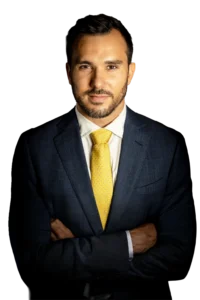
Your Attorney
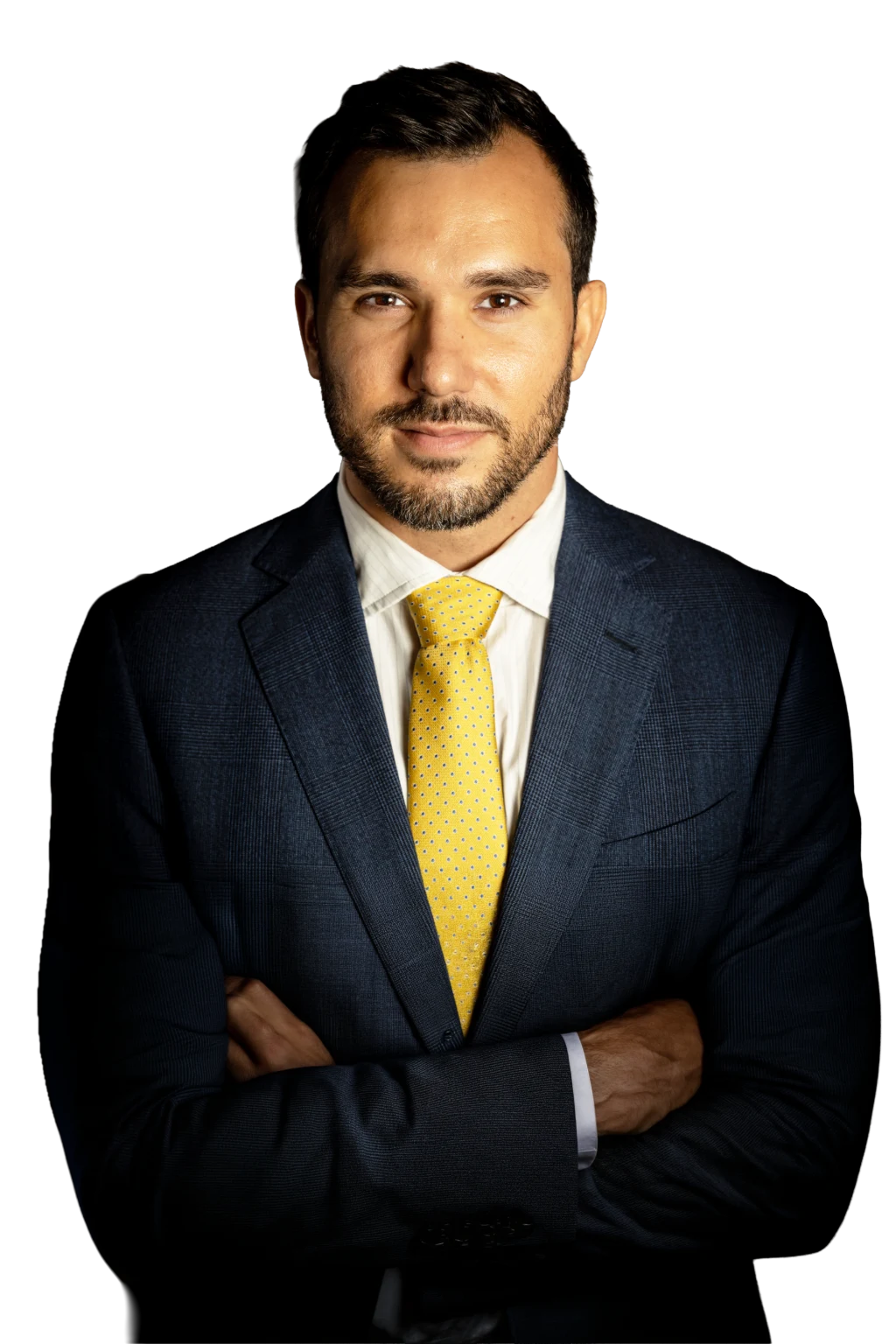
Tomas Robirosa is the founding attorney of Robirosa Accident & Injury Law. He built his practice around careful preparation and personal attention: when you hire the firm, you talk to your lawyer, in English or Spanish, and you always know where your case stands.
He graduated cum laude from Nova Southeastern University’s Shepard Broad College of Law, is a Florida Supreme Court Certified Circuit Civil Mediator, and is admitted to practice in Florida state courts and the U.S. District Court for the Southern District of Florida.
Recognition & memberships

Real reviews from real clients on Google.
EXCELLENT Based on 38 reviews
 Posted on Google

 Kk LlGreat service would recommend helped tremendouslyPosted on Google
 Johanna MartinezLA ATENCION FUE EXCELENTE Y MUY RAPIDA.Posted on Google
 Maša NestorovićI’ve had an amazing experience working with Tomas. He is super knowledgeable and very personable. He helped us tremendously, highly recommend.Posted on Google
 Kathy Maria AlvarezTomás fue un excelente profesional.Me dejó muy tranquila porque me explicó todo en español, con total claridad y transparencia. Si tuviste un accidente en Miami Beach, no dudes en llamarlo.Posted on Google
 Cristina GonzalezThe absolute best!! Responsive, honest, and easy to talk to. If you need an injury attorney in Miami Beach who also speaks Spanish, Tomas is the one to call. Highly recommend having him handle your case.Posted on Google
 Mario EspinosaAs a physical therapist, I’ve had the opportunity to work with Robirosa Accident & Injury Law while treating patients recovering from injuries. Their team has always been professional, responsive, and genuinely focused on making sure their clients receive the care they need. From a healthcare provider’s perspective, communication and coordination can make a huge difference in these cases, and their team does a great job staying involved without interfering with the clinical process. It’s clear they care about their clients as people, not just as cases. I would highly recommend Robirosa Accident & Injury Law to anyone looking for an injury attorney who is professional, accessible, and committed to helping their clients through the recovery process.Posted on Google
 Derek NierTomas is an industry professional. He handles his cases with extreme care and provides excellent customer service alongside excellent communication. I would recommend him to anyone looking for a competent attorney in the Miami Beach area.Posted on Google
 Rosalia Rodriguez AquinoEs muy buen Abogado, confiable, transparente y muy humanitario. Estás siempre pendiente a todos y muy comunicativo. Me siento muy satisfactoria de su buen trabajo. Ojalá hayan muchos abogados como él. Que Dios lo bendiga Gracias, porque ganamos el casoPosted on Google
 Andrea Silva🌟🌟🌟🌟🌟 Wow- excelente experiencia con Tomás. Lo recomiendo al 100%. Cuando ningún otro abogado me apoyaba y sentía que el caso estaba perdido, me conectaron con él y ¡ganamos! El proceso fue claro, fluido y efectivo. Es muy profesional, sabe exactamente lo que hace y realmente le importa ayudar a sus clientes. Estoy muy agradecida por su apoyo y sin duda lo recomendaré a cualquier persona que necesite un abogado.Posted on Google
 Karim BadawyThomas is a true professional! He is knowledgeable and will provide everything he knows for you! Highly recommend!
Tell us what happened. We’ll explain your options in English or Spanish, with no obligation.